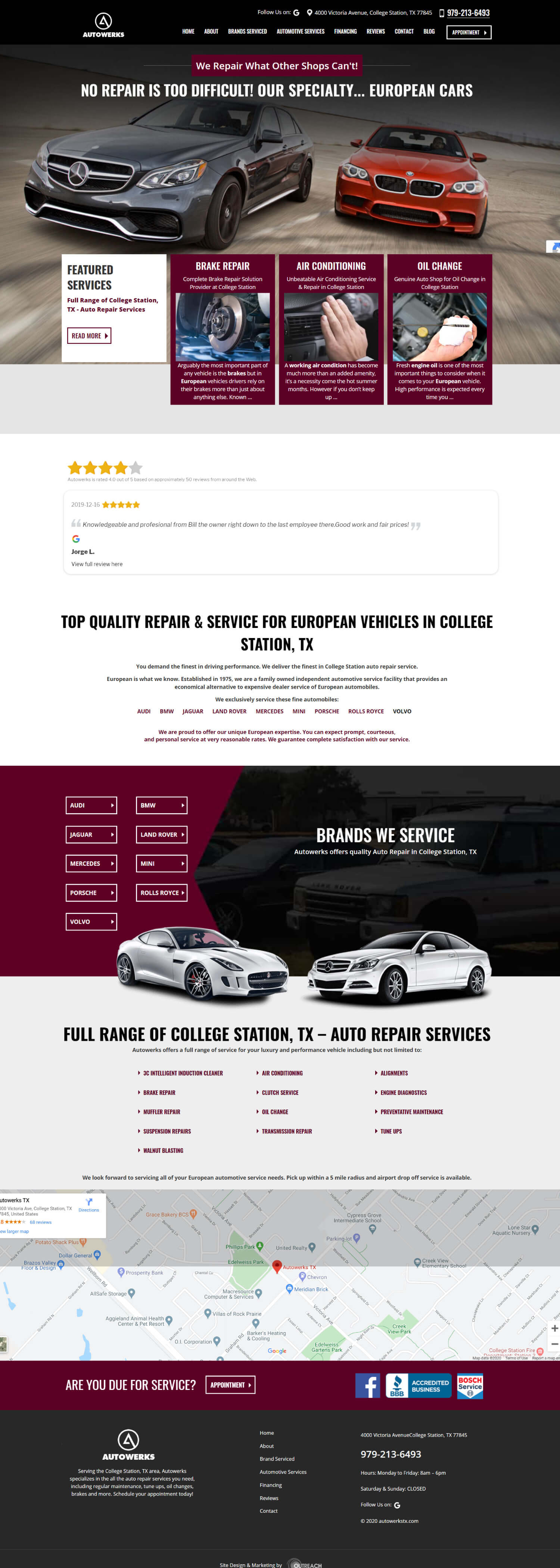

Somebody searches “BMW repair near me” at 4:40 on a Thursday, sees a listing that says you close at five, and drives over. You closed at four-thirty two years ago. Locked door. Dark bay.
That customer doesn’t call to complain. They go somewhere else, and some of them leave a one-star review explaining exactly why. Multiply that across every directory, map app and data aggregator still carrying stale details about your shop and you have a leak nobody on your team can see, measure, or fix by working harder. Plug it now, before the holiday weeks when your posted hours change again and every wrong listing gets tested by a real driver.
Quick Summary: Key Takeaways
- NAP means name, address and phone number: the three details every directory stores about your shop, and the ones that have to match everywhere.
- Search engines cross-check: conflicting details across sites make a listing look less trustworthy and harder to rank.
- Holiday hours are the stress test: a shop closed for a week with no listing update loses the searches it did earn.
- Duplicates are common: most shops that have moved, rebranded or changed owners have at least one ghost listing still live.
Search Engines Read Your Details Off Everyone Else’s Copy
Your website is one source. There are hundreds of others: map platforms, parts-store locators, insurance directories, chamber listings, review sites, and the data aggregators that quietly resell business records to all of them.
When those sources agree, a search engine can be confident it knows where you are and when you’re open. When four sites list one suite number and eleven list another, that confidence drops, and so does how prominently you show up for the searches that actually bring cars in. Consistency isn’t a ranking trick. It’s the absence of a problem.
→ local SEO services for repair shops
Holiday Weeks Are Where Wrong Hours Cost Real Car Count
Between late November and early January most shops close for a few days, run short hours, or shut the office while the bays keep working. Almost none of them update anything beyond a sign on the door. Which nobody sees from Google.
Here’s how it looks from outside. A driver searching on a Tuesday between the holidays sees “open,” calls, gets voicemail, and dials the next shop on the list. You paid for that search — through your site, your listings, and years of accumulated reviews — and then handed the job to a competitor over a detail that takes ten minutes to change. Set holiday hours across every profile you control before Thanksgiving.
An Old Phone Number Is the Most Expensive Line on the List
Numbers change more often than addresses. A shop switches carriers, adds a line, moves to a tracking number, or inherits a listing from the previous owner and never notices the old one is still out there. Years, sometimes.
Every stale number is a call that either dies or lands somewhere it shouldn’t. Repair work is expensive enough that customers shop around — the Bureau of Labor Statistics consumer price index for motor vehicle maintenance and repair rose to 460.185 in July 2026 from 431.604 a year earlier, a 6.6 percent increase — and a driver comparing three shops will simply drop the one that doesn’t pick up.
→ review management for auto repair shops
Duplicate Listings Divide Your Own Authority
Move across town and the old listing usually survives. Rebrand and you end up with two — the old name and the new one, both claiming to be you, neither one complete.
Reviews split between them. So do the signals that decide which listing appears on a map. Merging or removing duplicates is unglamorous work, and it routinely produces a bigger visibility gain in a month than anything clever anybody does that quarter. Start simple: search your shop name, your old name, your street address and each phone number you’ve ever used, one at a time, and write down everything that comes back.
Clean Listings Only Pay Off If You Can See What They Did
Fixing citations without measuring anything means trusting a feeling. Don’t. Track calls, form submissions and traffic source, and the effect of a cleanup shows up as a line on a chart instead of an argument at the counter.
Our clients get a live dashboard, so the numbers are there whenever you want to look rather than once a quarter in a slide deck. We’ve specialised in German and import repair shops since 2007, we work on a monthly agreement with no contract, and we take one client per smaller city so we’re never competing with ourselves on your behalf.
→ live reporting and analytics
Frequently Asked Questions
Q: What is NAP consistency in local SEO?
A: It means your business name, address and phone number appear identically everywhere online. Search engines compare those records across sources, and disagreement between them weakens how confidently your shop is shown in local results.
Q: Do citations still matter for local search rankings?
A: They matter less as a growth lever than they did a decade ago and just as much as a hygiene requirement. Inconsistent or duplicate records still hold shops back, even when everything else is done well.
Q: Should I update my Google hours for the holidays?
A: Yes, and before the week arrives rather than during it. Special hours are the single most-viewed detail on a local listing in late December, and getting them wrong turns a hard-won search into a wasted trip.
Q: How do I find duplicate listings for my auto repair shop?
A: Search your business name, any former name, your street address and each phone number you’ve used, separately. Anything that returns a profile you don’t manage is a candidate for merging or removal.
Let’s Find Out What the Internet Currently Says About You
We’ll run your shop’s details across the directories that matter and show you exactly which records disagree. Takes an afternoon. It usually surprises the owner.
German & Import Auto Repair Shop Marketing, 2555 Townsgate Rd. Suite 200, Westlake Village, CA 91361. Online at importautoshopmarketing.com.